
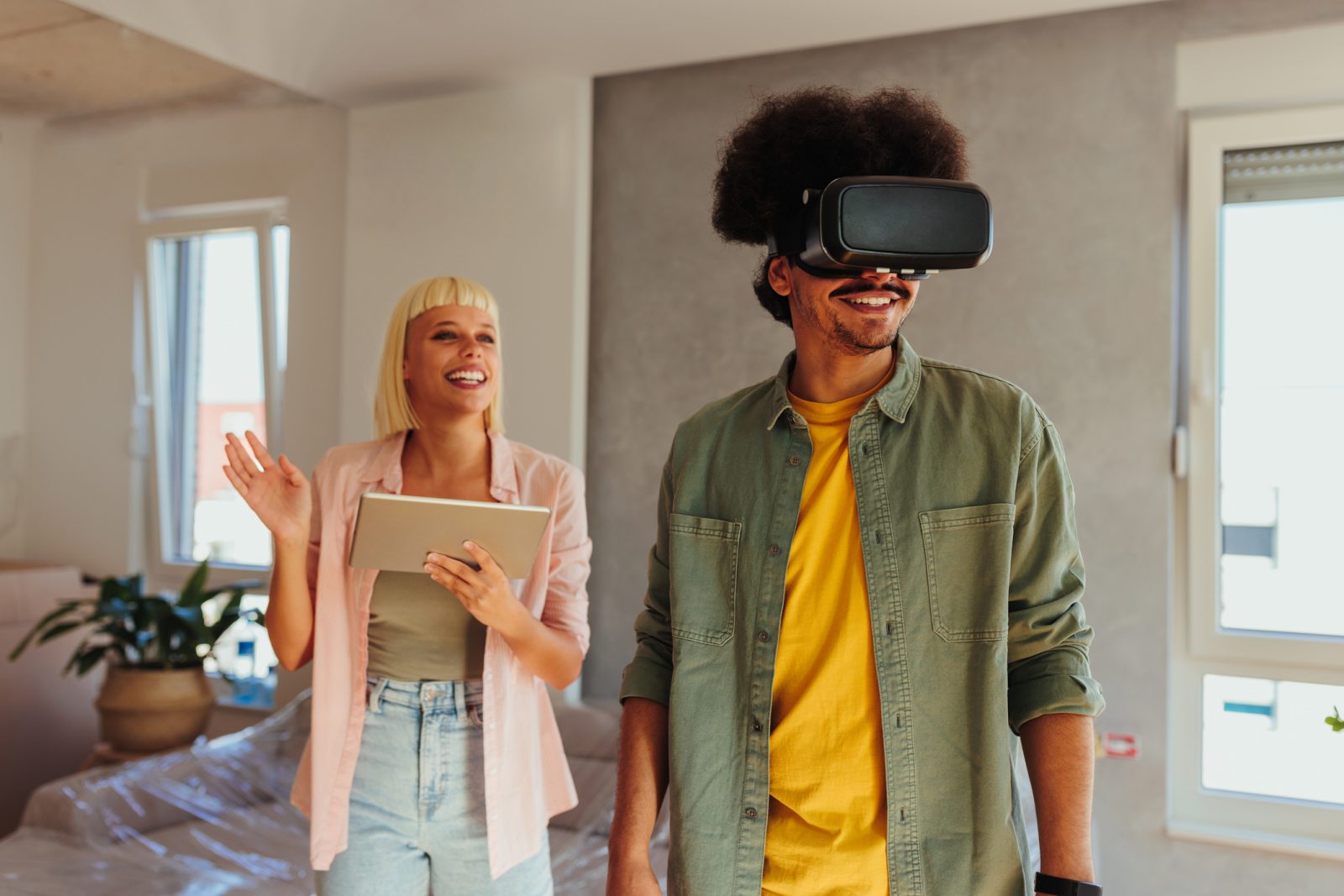
Selling a vision from a piece of paper is a classic challenge in new construction. You’re asking clients to make the biggest purchase of their lives based on floor plans, material samples, and renderings. What if you could hand them the keys to their new home before breaking ground? With virtual reality (VR), you can.
VR is rapidly becoming an essential tool for homebuilders. It creates immersive, photorealistic digital twins of your homes, fundamentally changing how customers connect with and commit to a new build. This isn’t just fancy tech; it’s a powerful sales tool that solves core industry challenges, improves customer satisfaction, and boosts your bottom line.
Let’s explore how VR reshapes the new home buying journey, elevates the customer experience, solves practical construction challenges, and gives builders a significant competitive advantage.
Bridge the Imagination Gap for Buyers
The main challenge in selling unbuilt homes is the “imagination gap.” Most people struggle to visualize room dimensions, ceiling heights, and the overall flow of a home from 2D floor plans. VR closes this gap by providing a realistic experience.
Let Buyers Walk Before You Build
When potential buyers wear a VR headset, they enter a full-scale digital model of the home. This interactive, self-guided walkthrough creates a deep, physical understanding that drawings can’t convey.
- Experience True-to-Life Scale: Buyers can appreciate vaulted ceilings in the great room or assess kitchen island space, gaining spatial context blueprints lack.
- Interact with the Space: Modern VR allows interaction. Clients can open virtual doors, see actual views from windows, and gauge sunlight movement. This turns passive viewing into an active experience.
- Forge an Emotional Bond: VR helps buyers connect emotionally sooner. Standing on their future patio, they picture their life there, making it a powerful closing tool.
Simplify Customization and Upgrades
Virtual Reality excels at showcasing options and upgrades instantly. Instead of imagining hardwood floors, clients can switch between carpet, tile, and hardwood with a click.
VR transforms design selection:
- Swap flooring materials in real-time.
- Change kitchen cabinet styles and countertop finishes.
- Test different paint colors or lighting fixtures.
This visual confirmation boosts buyer confidence and simplifies upselling. They immediately see the value of premium finishes, increasing satisfaction and revenue per home.
Streamline Operations & Expand Your Market
VR doesn’t just “wow” customers; it offers tangible business benefits that improve your bottom line and expand your market reach.
Reduce Reliance on Model Homes
Model homes are a significant expense. Building, furnishing, and maintaining them ties up substantial capital. VR offers a cost-effective alternative. For a fraction of the cost, you can create a virtual library of every floor plan you offer.
- Showcase Your Full Portfolio: Clients can tour any model instantly, even if your physical model isn’t available.
- Save on Upfront Investment: Reduce capital locked in non-sellable inventory, freeing funds for marketing or land acquisition.
- Lower Maintenance Costs: Virtual models require no heating, cleaning, or security, remaining pristine and accessible 24/7.
Sell to Anyone, Anywhere
Geographic limitations are gone. With remote work and relocation common, buyers often shop from afar. VR eliminates this hurdle. Offer web-based VR tours accessible on any device. For high-value clients, ship a low-cost VR headset so out-of-state buyers can experience properties with full immersion.
Catch Design Flaws Pre-Construction
VR is excellent for design verification. Architects, engineers, and clients can walk through digital models to identify potential flaws, like awkward beams or misplaced doors. Catching these digitally is a simple fix; correcting them post-construction leads to costly delays and change orders.
How Fischer Homes Uses VR to Redefine the Buyer Journey
Fischer Homes is showing how VR can transform home sales with their 2026 Virtual Concept Home, created in partnership with Zonda. This fully digital model lets buyers explore new layouts and features without waiting for construction.
- Instant Tours: Buyers can view the home online or with a VR headset, getting a detailed look before anything is built.
- Adaptable Designs: The Concept Home includes multigenerational suites, flexible spaces, and layouts that adapt to different lifestyles, all ready to explore virtually.
- Cost Savings: Instead of spending on physical models, Fischer tests bold ideas digitally, saving time and money while gathering valuable feedback.
- Smarter Design Choices: With Zonda’s data, Fischer uses VR engagement to refine future designs, ensuring their homes meet buyer needs right from the start.
By using VR as both a sales tool and a testing ground, Fischer Homes is embracing innovation to reduce risks, attract modern buyers, and stay ahead in the market.
Gaining Your Competitive Edge in a Crowded Market
In today’s market, standing out is essential. Offering a VR experience sets you apart from competitors using traditional sales methods, positioning your brand as modern, innovative, and customer-focused. This is especially appealing to Millennial and Gen Z buyers, now the largest group of homebuyers, who expect seamless, tech-driven experiences.
With VR, you’re not just selling a home. You’re delivering a transparent, engaging, and trust-building journey that gives buyers the confidence to commit, even to homes still under development.
Getting Started with Virtual Reality is Easier Than You Think
Integrating VR might seem complex, but it’s more accessible than ever. Specialized architectural visualization firms can transform your CAD or BIM files into immersive VR experiences.
There are several ways to deploy these tours:
- Sales Center Kiosk: A dedicated station with a high-end headset for a powerful, immersive experience.
- Web-Based Tours: 360-degree tours embedded on your website, accessible on any browser.
- Mobile VR: Experiences designed for use with a smartphone and an inexpensive cardboard headset.
A great way to start is by commissioning a virtual tour for one of your most popular floor plans. Test it, gather feedback, and measure its impact on engagement and sales.
The future of home sales is experiential. Virtual reality makes it possible to sell homes faster, reduce costs, and build an innovative brand.
Ready to improve your marketing strategy? Get a free paid media audit. We’ll analyze your paid media strategy, provide actionable insights, and highlight areas for improvement to help you achieve better results